
Indian fruit exports have long been built around a handful of staples — mangoes, bananas, grapes. But buyers abroad are increasingly asking about a different category: exotic and non-traditional fruits that used to be grown only for local markets, or not grown in India at all. Dragon fruit, passion fruit, rambutan, longan and mangosteen are moving from niche curiosities to real line items in export conversations, and a wider range of exotic fruits is being watched closely as the next stage of this shift.
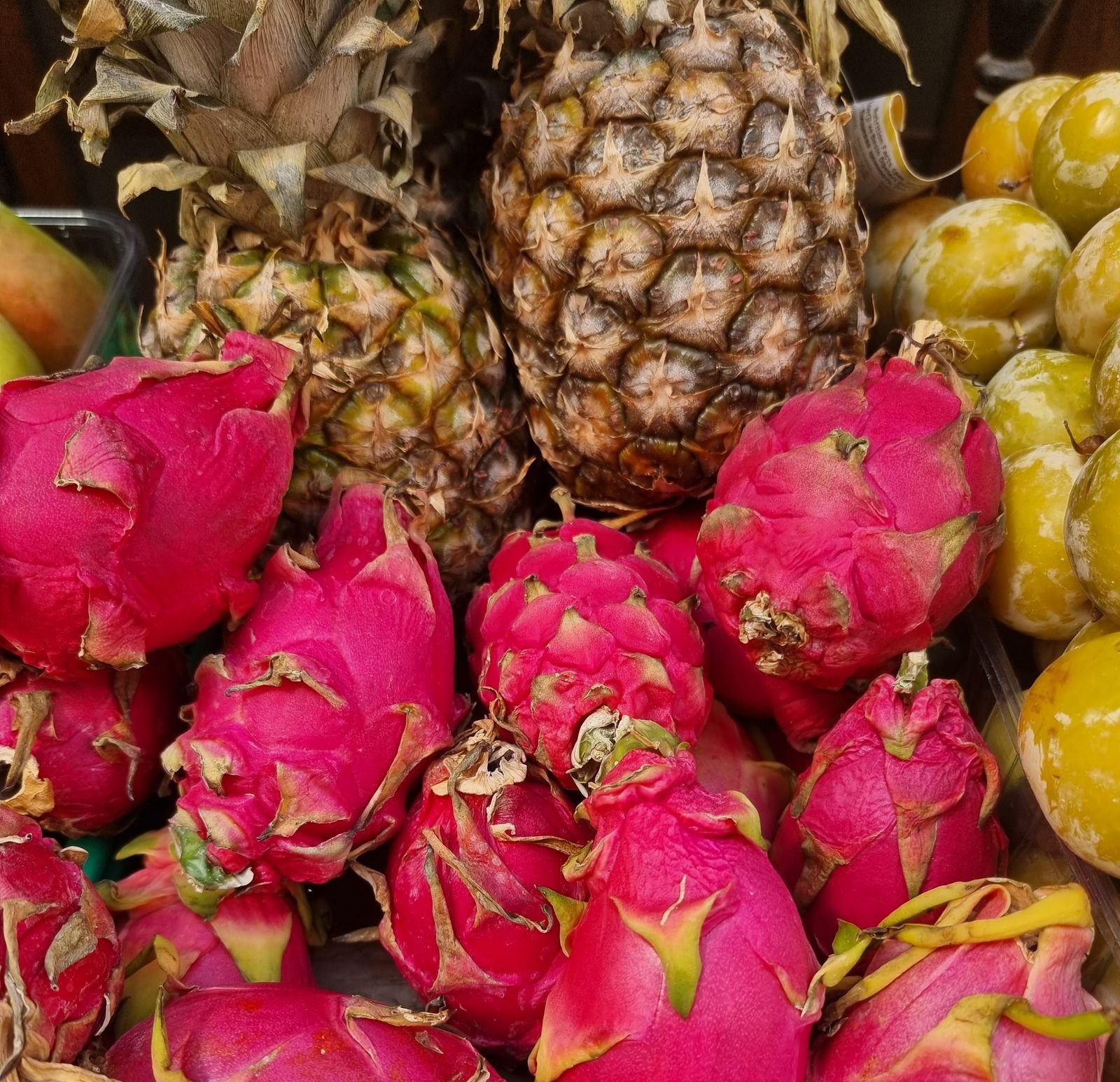
Why exotic fruits are entering the export conversation
Several things are happening at once. Indian farmers in states like Gujarat, Maharashtra, Karnataka, Tamil Nadu, Odisha and the Northeast have been expanding acreage under crops that were rarely grown commercially a decade ago. At the same time, demand from the Gulf, Southeast Asia and parts of Europe for fruits associated with wellness and novelty — bright colours, high vitamin content, “superfood” positioning — has grown steadily. That combination is what turns a fruit from a local specialty into an export category worth tracking.
Dragon fruit: the furthest along
Dragon fruit (kamalam) is the clearest example of this shift actually reaching export pallets. Cultivation has expanded across Gujarat, Maharashtra, Karnataka, Odisha and parts of the Northeast, and consignments have moved to markets including the UAE, Singapore, Malaysia, Japan and parts of Europe. It is not yet a volume category on the scale of mangoes or grapes, and supply is still concentrated in a limited harvest window, but the trend line is real and buyers are increasingly asking Indian exporters whether it is on their radar.
Passion fruit, rambutan, longan and mangosteen
Alongside dragon fruit, a smaller group of exotic fruits has genuine, documented export activity out of India. Passion fruit is grown commercially in the Northeast and parts of South India and moves into pulp and fresh fruit trade. Rambutan, longan and mangosteen are grown in pockets of Kerala, Tamil Nadu, Karnataka and the Northeast, largely on a smaller scale, with export volumes that are modest but growing as processors and exporters build the cold-chain and grading infrastructure these fruits need. None of these are mainstream Indian export categories yet — they are best understood as an emerging tier sitting just behind dragon fruit.
Blueberries: the opportunity that’s still ahead
Blueberries are worth a separate, more careful note. Domestic cultivation in India is still small and concentrated in early-stage growing regions such as Himachal Pradesh, Uttarakhand and parts of the Northeast, and India today is a net importer of blueberries rather than an exporter — imported volumes are well ahead of domestic production. That makes blueberries less an existing export line and more a category to watch: as acreage under cultivation increases and cold-chain infrastructure matures, it is realistic to expect India’s own production and, eventually, export potential to grow. Buyers researching Indian exotic fruit sourcing should treat blueberries as a forward-looking opportunity rather than a current one.
What this means for international buyers
For buyers evaluating India as a source of exotic fruit, the practical takeaway is to separate what is available now from what is coming. A short list of questions helps:
- Which exotic fruits does the exporter currently handle, versus which are still in development?
- What growing regions and harvest windows apply to each fruit being discussed?
- Is the cold chain and packing set up for delicate exotic produce, not just staple fruits and vegetables?
- What volumes are realistically available, and how do they compare with established categories?
Exotic fruits are a genuine growth story in Indian agriculture, but the category is uneven — some fruits, like dragon fruit, already move through export channels; others, like blueberries, are still building toward that point.
APCON Exports tracks these categories closely as part of a broader focus on fresh, frozen and dehydrated produce out of India. If exotic and emerging fruit categories are part of your sourcing plans, get in touch and we can talk through what’s realistically available today and what’s worth watching for the future.
Leave a Reply